.png)
.png)

.png)


.png)

Cedar Shake Preservation Services
Responsible Cedar Roof Life Extension for Victoria BC & Vancouver Island
Cedar shake preservation is not about shortcuts or miracle coatings.
It’s about maintaining cedar that still has usable life—and only when an inspection confirms it makes sense.
At The Great Canadian Roof Doctor Inc., cedar shake preservation is offered as part of an inspection-first roofing approach designed to help homeowners extend roof life responsibly, manage timing, and avoid unnecessary replacement.
What Cedar Preservation Is — and Isn’t
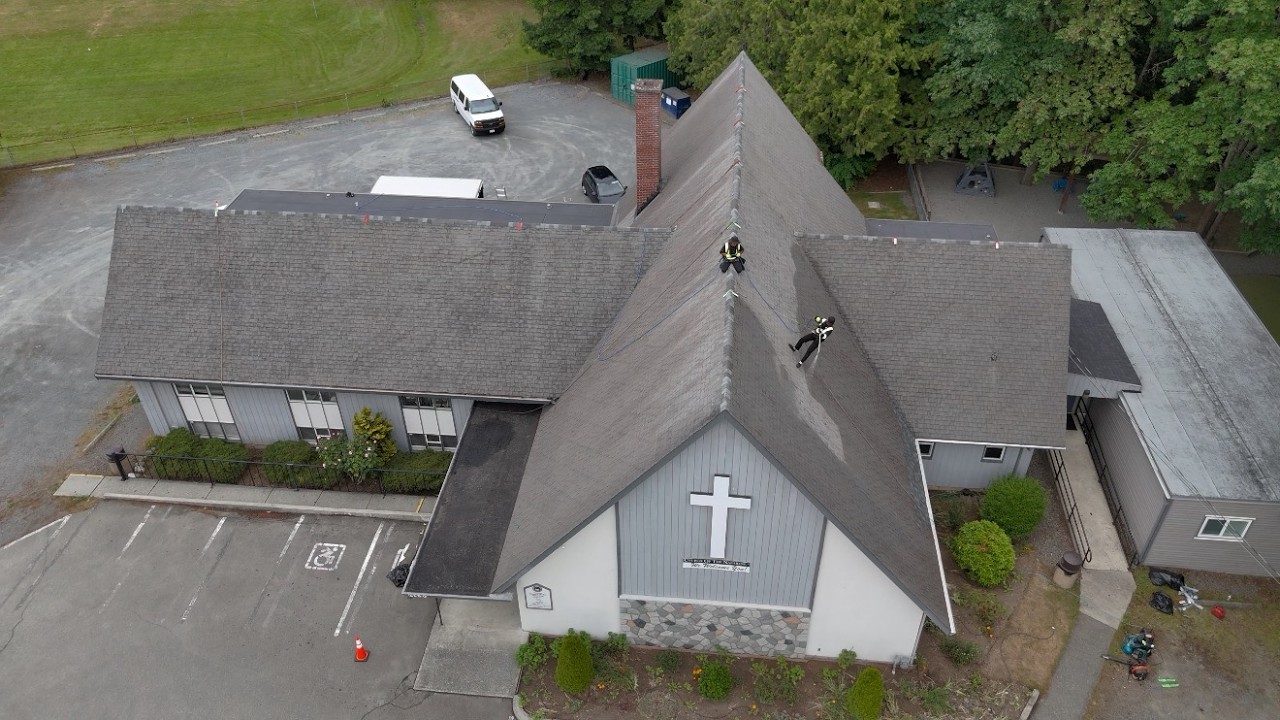
Cedar preservation is a maintenance and restoration service for cedar shake roofs that are still structurally sound. Our process focuses on cleaning, drying, and re-applying a semi-transparent cedar protectant to help reduce moisture retention and weathering.
We use Messuirs (semi-transparent cedar protectant) as part of the preservation process where appropriate.
In many cases, the cleaning step itself provides meaningful benefit. Removing dirt and organic buildup helps cedar shed water and dry out faster, which can reduce prolonged moisture exposure and help prevent rot—often extending usable life even before the protectant is applied.
Cedar preservation is designed to:
-
Remove harmful organic growth (moss, algae, lichen) that holds moisture against cedar
-
Help the roof dry out faster and reduce chronic moisture exposure
-
Slow surface weathering and premature deterioration
-
Support long-term planning through scheduled maintenance cycles
Cedar preservation is not:
-
A repair for active leaks
-
A substitute for failed flashings, underlayment, or roof deck issues
-
A guarantee against future problems
-
A way to “save” cedar that has reached end-of-life
Condition—not age—determines eligibility.
Performance Expectations (Not a Warranty)
When cedar is still serviceable and the roof qualifies, preservation is intended to extend the usable life of the roof.
-
On average, a properly timed preservation may extend a cedar roof’s serviceable life by approximately 7–10 years.
-
For optimal performance in our coastal environment, cedar roofs should typically be restored about every 7 years on average (timing varies based on exposure, shade, tree cover, and roof design).
These are performance expectations based on typical field results, not a warranty or guarantee. Your roof’s results depend on existing condition and site factors.
When Cedar Preservation Makes Sense
Cedar preservation may be appropriate when:
-
Shakes are weathered but still structurally sound
-
There are no active leaks attributable to failed roofing components
-
Fasteners, ridges, and key details are still serviceable
-
The homeowner wants to delay replacement responsibly
-
The roof can still shed water properly and dry out between wet cycles
Preservation is most effective as part of a maintenance strategy, not a last-minute rescue.
Our Inspection-First Process
Every cedar preservation project begins with a professional roof inspection.
Before recommending preservation, we assess:
-
Shake condition (splitting, cupping, softness, decay)
-
Roof planes, valleys, ridges, and transitions
-
Flashing details (chimneys, skylights, vents, walls)
-
Signs of trapped moisture, rot risk, or chronic saturation
-
Ventilation and drying factors that affect cedar performance
If a roof does not qualify, preservation will not be recommended.
Proper Preparation Matters
Before applying any cedar protectant:
-
The roof is cleaned using methods appropriate for cedar
-
Moss, algae, and organic buildup are removed
-
The roof is allowed the right conditions to dry so the protectant can perform properly
-
The true condition of the cedar is revealed
In many cases, cleaning the cedar roof alone can add several years of usable life by removing dirt and organic buildup that holds moisture. A cleaner surface allows water to shed and dry faster, which helps reduce prolonged wetting and the risk of rot.
Applying a protectant over organic buildup reduces effectiveness and increases risk.
Understanding the Limits of Cedar Preservation
Even on a qualifying roof, preservation does not eliminate all risk.
Leaks and failures can still occur at:
-
Skylights
-
Chimneys
-
Vents and penetrations
-
Valleys and transitions
-
Nail penetrations and flashing interfaces
Some roof deficiencies can only be confirmed through destructive testing (lifting/removing materials). Most inspections and preservation work are non-destructive by nature, which is why ongoing monitoring matters.
Cedar Preservation vs. Replacement
Cedar preservation is intended to:
-
Buy time
-
Improve performance between inspections
-
Support long-term planning
It is not intended to replace re-roofing when cedar has reached true end-of-life.
Cedar Roofs on Vancouver Island
Cedar roofs in Victoria, Saanich, Langford, Nanaimo, Duncan, and across Vancouver Island face unique challenges:
-
Coastal moisture
-
Persistent rainfall
-
Moss and organic growth
-
Shade and tree cover
-
Wind exposure and salt air (in some areas)
Our recommendations are based on local conditions, not generic assumptions.
What Happens After Preservation
Following cedar preservation, homeowners are encouraged to:
-
Schedule periodic inspections
-
Monitor high-risk areas
-
Address isolated issues promptly
-
Continue routine maintenance
Preservation works best when paired with ongoing inspection and care.
Is Cedar Preservation Right for Your Roof?
Cedar preservation is not for every roof—and we believe that’s a good thing.
If you’re looking for honest answers (not pressure), a professional roof inspection is the best place to start.
Request a Roof Inspection
Serving Victoria BC & Vancouver Island · Inspection-First Roofing

.png)
.png)